Learning difficulties
Assessment and support for learning difficulties at the Psychological Help Centre, Karachi — in clinic in PECHS and DHA.
If you or someone else is in immediate danger, this page is not the right place. Here is what to do →
What people describe
The thing parents describe first is usually the gap. A child who is clearly trying — sitting down, doing the hours — and a result that does not match the effort.
Reading that is slow and flat, or avoided, with a book put down after half a page. Writing that is physically hard work: gripped too tight, taking three times as long, and untidy however carefully it is done. Spelling that changes for the same word twice on one page. Tables and number facts that go in on Tuesday and are gone by Thursday. A child who can tell you the answer out loud and cannot get it onto paper.
Homework becomes the centre of the house. Two or three hours a night with a parent or tutor beside them. Report cards that repeat one sentence year after year — careless, does not check work, could do better.
Families here often wonder whether the difficulty is the language rather than the learning. A child doing everything in English at school and living in Urdu at home is carrying a real extra load, and separating that from a learning difficulty is one of the things an assessment is designed to do.
And the part that brings most families in is none of the above. It is a child who has started saying they are stupid, and has begun to stop trying — because not trying is a better explanation for failing than trying was.
Recognising your child in a paragraph on a website is not the same as knowing what is going on. This page describes; it does not assess anyone, and there is nothing here to score.
When it is worth speaking to someone
Earlier is easier than later, and you do not need the school to have raised it first.
What a clinician pays attention to is duration, pattern and cost. A gap between effort and result that has run over terms rather than through one bad month. A difficulty that is specific rather than general — reading, writing or number work, while the child is plainly bright in conversation. And a cost that is showing: confidence going, school avoided, or a child who has stopped putting a hand up.
Schools and examination boards generally require a written assessment from a qualified clinical psychologist before support or accommodations can be arranged. And it is far better to do this in the year before a board year than during one.
Only a qualified clinician can tell you what is going on — a website cannot. What a page like this can tell you is that the question is a reasonable one to bring.
How PHC approaches it
PHC is an assessment-first practice. Nothing useful can be said about how a child learns until it has been measured.
- An initial sessionWe ask what has been going on, for how long, what school has said and what has already been tried. Bring school reports and a sample of the child's written work if you have one. Nothing is administered before this conversation.
- Learning and achievement assessmentWhere it is warranted, the route is a learning and achievement assessment — covering specific learning difficulties including dyslexia and dysgraphia. It is administered by a qualified clinical psychologist and written up as a report.
- IQ testing, where the question is ability against attainmentWhere the question is how a child's general ability compares with what they are producing, IQ testing is the instrument for it. The two assessments are frequently done together, because the gap between them is often the whole finding. Where one is not warranted, it is not done — you will not be given tests you do not need.
- What the report is for, and what followsThe report describes how this child learns, where the difficulty sits and what would help, and you decide who sees it. From there, support is built around the finding — remedial work on the specific skill, changes to how homework is handled at home, and work on confidence where it has taken the hit. Parenting support is usually part of it, because most of the daily change happens at home. Sessions are 50 minutes, in clinic at our DHA clinic or in PECHS.
Who you would see
Psychologists at PHC hold a minimum postgraduate qualification in clinical psychology and over 800 supervised clinical hours. The two psychologists below name learning difficulties among their areas of practice.
 Asif J. SoherwardyAssociate Clinical Psychologist · 4+ years
MS Clinical Psychology, Bahria University. Learning difficulties in children, neurodevelopmental disorders, difficulty adjusting to school, and self-esteem. Child-Centered Play Therapy, Applied Behaviour Analysis, sensory integration, remedial therapy and CBT.Read their profile →
Asif J. SoherwardyAssociate Clinical Psychologist · 4+ years
MS Clinical Psychology, Bahria University. Learning difficulties in children, neurodevelopmental disorders, difficulty adjusting to school, and self-esteem. Child-Centered Play Therapy, Applied Behaviour Analysis, sensory integration, remedial therapy and CBT.Read their profile →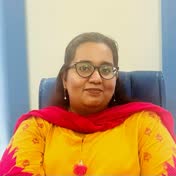 Falahat AwanClinical Psychologist · 18+ years
MPhil Clinical Psychology. 4,000+ clinical hours. Learning disorders and neurodevelopmental disorders, alongside anxiety and depression. Psychological assessment and psychotherapy across children, adolescents and adults.Read their profile →
Falahat AwanClinical Psychologist · 18+ years
MPhil Clinical Psychology. 4,000+ clinical hours. Learning disorders and neurodevelopmental disorders, alongside anxiety and depression. Psychological assessment and psychotherapy across children, adolescents and adults.Read their profile →Who you see is decided at the initial session, not before it.
Questions people ask first
My child's school has asked for an assessment. Is this the same thing?
Almost always, yes. Schools want a written assessment from a qualified clinical psychologist setting out how a child learns and what support is warranted. That is what this produces. Bring the school's letter — it usually names exactly what they need.
Will a report label my child?
A report describes how a child learns: what they do easily, what they find hard, and what would help. It exists to get a child support they are not currently getting, and you decide who sees it. Parents often find it does the opposite of labelling: it replaces lazy and careless with an explanation.
Can adults be assessed?
Yes. Adults are assessed at PHC, most often when reading or written work has become a problem at university or at work.
Can this be done online?
Partly. The conversations can be, and PHC runs online sessions across Pakistan and internationally. Some of the testing has to be administered in person, in clinic. We will tell you which parts apply to your child when you book, rather than after you have paid.
Confidentiality, session length, fees and choosing your psychologist are answered in full in questions people ask before booking.
Speaking to someone starts here
PHC is appointment-only. Message or call and a real person answers — Monday to Saturday, 10am to 8pm PKT.
Not sure whether this is us? Contact us anyway. We will tell you directly whether we can help, and refer you elsewhere if we cannot.
Six details, and we can match you
- Name of the person who will attend
- Their age
- What is going on, in your own words
- Whether you would prefer a male or female psychologist
- Online, or in clinic in Karachi
- Whether the person attending is a minor or elderly
If someone else is paying, we will also ask for guardian or payer details. A slot is held once the booking payment is received — half the fee, at least 24 hours ahead.